.png?width=175&height=73&name=ORIGINAL%20LOGO%20Blue%20and%20Green%20(1).png "PathIvy Logo")
.png?width=50&name=author-image%20(2).png)
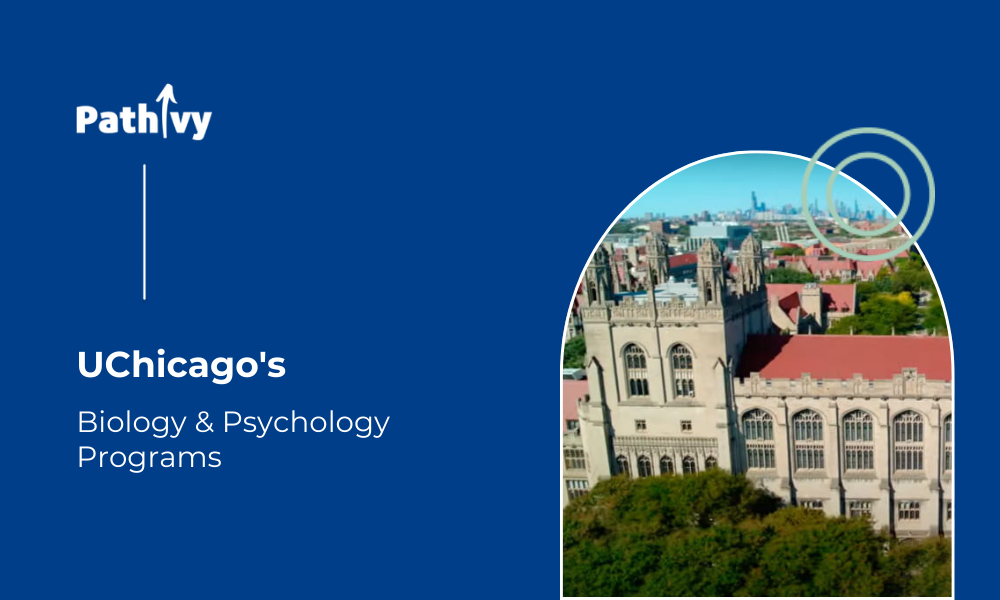

The University of Chicago is widely known for its academic rigor and deep commitment to research. From pioneering economic theories to advancing biological sciences, UChicago has built a reputation as a place where intellectual curiosity is taken seriously.
For students interested in biology and psychology, this environment creates opportunities that go far beyond the classroom.
Academic Structure: Flexibility First
One of the most distinctive aspects of UChicago is its flexibility.
Students do not apply directly into most majors. Instead, they have until the end of their second year to declare, giving them time to explore different academic paths.
This approach is especially helpful for students interested in overlapping fields like biology and psychology, where interests often evolve.
Understanding how this flexibility compares to more structured systems can be important when planning your academic path, particularly when thinking about direction and specialization, as discussed in How to Choose the Right Major Through Counseling.
Biology and Psychology: Overlapping Pathways
Both majors share a strong quantitative and research foundation.
Biology Requirements Include:
- general biology courses
- calculus
- general and organic chemistry
- physics
- statistics
Psychology Requirements Include:
- statistics
- research methods
- psychology breadth courses
- calculus
There is significant overlap, making it easier to double major or explore both fields.
Research Is Central to the Experience
At UChicago, research is not optional. It is expected.
Students regularly:
- work in professor-led labs
- participate in research programs
- pursue independent projects
Opportunities include:
- faculty research labs
- the Marine Biological Laboratory (MBL)
- Argonne National Laboratory collaborations
This emphasis on hands-on experience is a defining part of the UChicago academic experience and mirrors what top universities look for in STEM students broadly, as explored in STEM at Yale: Opportunities in Science, Technology, and Research.
Specialization and Academic Depth
While psychology does not have formal specializations, students can design their own focus areas such as:
- cognitive neuroscience
- cultural psychology
- sensation and perception
Biology students, particularly those pursuing a B.S., often complete an undergraduate thesis, adding another layer of depth to their academic experience.
This level of academic ownership is something selective programs value, especially when evaluating how students engage with their field beyond coursework.
What Student Experience Actually Looks Like
Coursework often blends disciplines.
For example:
- coding in RStudio for biology research
- statistical modeling
- interdisciplinary lab work
Students are not just learning concepts. They are applying them in real-world research settings.
Outside the classroom, many students:
- join research labs early
- assist with data collection and analysis
- contribute to publications or presentations
These experiences help build both technical and analytical skills.
Why UChicago Stands Out
UChicago’s strength is not just its academics. It is how those academics are structured.
Students are encouraged to:
- explore before committing
- think critically across disciplines
- engage deeply with research
This makes it particularly appealing for students interested in fields like biology and psychology, where curiosity and experimentation are essential.
If you are comparing top research-focused schools, Columbia University Acceptance Rate and Admission Insights offers a useful contrast in how similarly selective institutions structure their academic environments.
Final Thoughts
Biology and psychology at UChicago are not just majors. They are entry points into a much larger academic experience centered around research, exploration, and intellectual growth.
Students who thrive here are not just strong academically. They are curious, proactive, and willing to engage deeply with their work.
How PathIvy Helps You Prepare for Schools Like UChicago
At PathIvy, we help students build profiles that align with research-driven universities.
That includes:
- developing academic direction early
- finding meaningful research opportunities
- building depth in specific interests
- crafting a cohesive application narrative
For students interested in competitive STEM pathways, understanding how to stand out is critical, especially when building research and academic experiences strategically, as outlined in Engineering Competitions: Why They Matter and When They Actually Help.
Strong applicants are not just prepared. They are intentional.