.png?width=175&height=73&name=ORIGINAL%20LOGO%20Blue%20and%20Green%20(1).png "PathIvy Logo")
.png?width=50&name=author-image%20(2).png)


Harvard: How to Get Accepted with Expert Guidance from PathIvy
Many students view Harvard University as the ultimate benchmark of academic achievement. Whether you are at the very beginning of your college search or finalizing your list, understanding how Harvard admissions works is essential. This acceptance rate guide will walk you through the timeline, the requirements, the level of preparation needed, and the strategic steps that can strengthen your chances of joining Harvard’s next class.
Understanding Harvard Admissions and Timing
Gaining acceptance to Harvard University requires long-term planning, academic excellence, and a thoughtful approach to your application. Students apply during senior year and must stay aware of several key deadlines throughout the fall and winter. Harvard admissions offers two pathways: Restrictive Early Action and Regular Decision. Dates vary slightly from year to year, but they generally follow this schedule for the 2025 to 2026 cycle.
Restrictive Early Action applications and financial aid materials are due November first. Regular Decision applications are due January first. Final financial aid materials for Regular Decision must be submitted by February first. Students who apply for REA receive their admissions decisions in mid-December, while Regular Decision applicants hear back in late March.
Restrictive Early Action is a unique option. Students may still apply early to public universities, but they cannot apply early to other private colleges. Since the Harvard acceptance rate is extremely selective, many students wonder whether applying early improves their odds. The answer depends on the strength of your academic profile going into senior fall and whether Harvard is your clear first choice.
How Competitive Is the Harvard Acceptance Rate
Every acceptance rate guide indicates that Harvard is one of the most selective universities in the world. The Harvard acceptance rate for recent years has ranged from just above three percent to just under four percent. These numbers reflect both the global demand for a Harvard education and the high level of rigor expected from each applicant.
To be competitive, students must think about Harvard admissions from the moment they begin high school. That does not mean narrowing your interests too early. Instead, it involves taking the strongest courses available, pushing yourself academically, and committing to activities that genuinely matter to you.
Building a Strong Profile for Harvard Admissions
Harvard evaluates students holistically. While high academic performance is essential, your personal qualities, intellectual curiosity, and the impact you make in your community are equally important. Harvard admissions officers describe their ideal student as someone who contributes to the college during their four years on campus and to society long after graduation.
This philosophy means you should take a rigorous course load and aim for strong grades, but you should also develop activities that reflect your interests in meaningful ways. Leadership can come in many forms, whether you are organizing a new initiative, conducting independent research, mentoring younger students, or pursuing creative work that expresses your perspective.
Exploring the Harvard Campus and Community
Because the Harvard acceptance rate is so competitive, understanding the campus culture can make your application more compelling. Harvard offers tours, information sessions, and opportunities to connect with current students. You can visit in person or take a virtual tour if travel is not possible.
Harvard admissions also offers student coordinators who answer questions submitted online. During tours and sessions, you can ask about academic life, the sense of community, and the student experience. Reading The Harvard Crimson, the student run newspaper, can also give you a better sense of campus culture and current conversations.
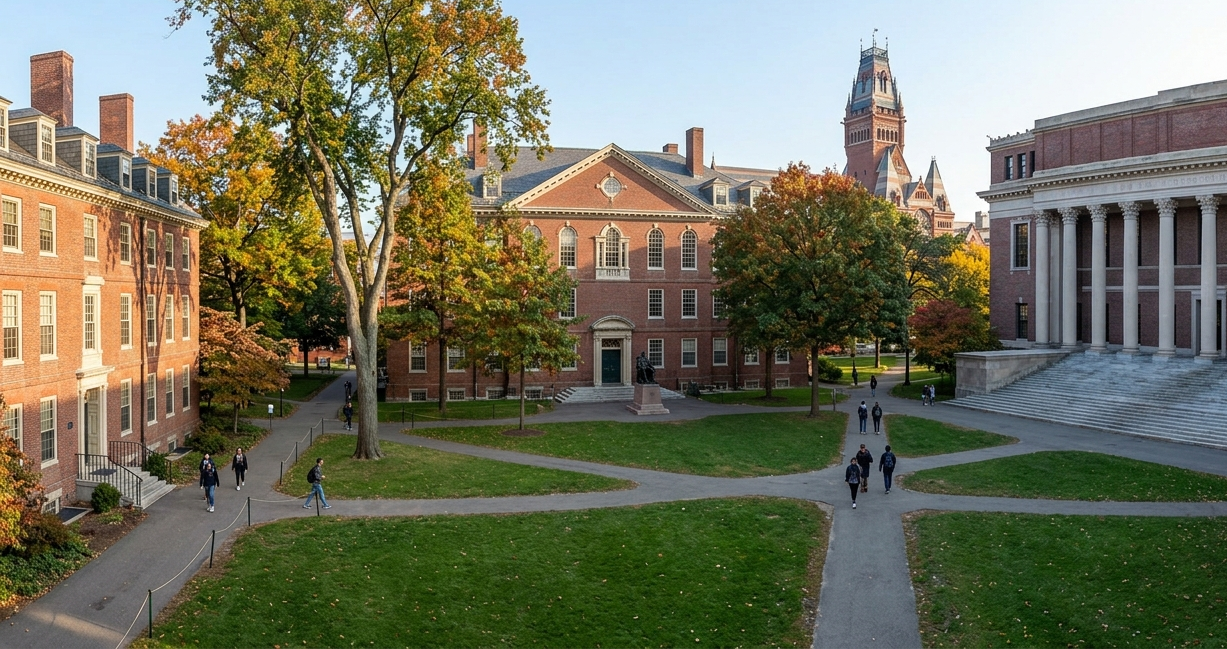
How to Apply to Harvard: A Strategic Breakdown
The application process requires several components, each evaluated closely by Harvard admissions officers.
Academic Requirements
Harvard does not provide a minimum GPA, but the class of 2028 had an average weighted GPA of 4.21. This reflects the academic expectations of a top-tier research university. Students should aim for the strongest possible grades in the most advanced courses available at their high school.
Test Scores
Harvard requires SAT or ACT results for the 2025 to 2026 cycle. The middle fifty percent ranges for students admitted to the class of 2028 were 740 to 780 in SAT Reading and Writing, 770 to 800 in SAT Math, and 34 to 36 for the ACT Composite. Strong scores help demonstrate academic readiness and perseverance.
Personal Statement
Because many applicants share similar academic profiles, your personal statement plays a powerful role. It should reveal something that your transcript cannot convey. A strong essay gives Harvard admissions officers a clearer understanding of your values, your voice, and your growth.
Harvard Supplemental Essays
Harvard requires five shorter essays of up to 150 words each. These prompts allow you to highlight your perspectives, experiences, interests, and goals. Since this section is closely evaluated, each response should bring out a different dimension of who you are. Together, these essays help admissions officers understand how you will contribute to the campus community.
Recommendations and Interviews
Students submit recommendation letters from two teachers in different subjects. You may also submit optional letters from coaches, employers, or research mentors. While Harvard offers optional alumni interviews, not every student will be contacted. Lack of an interview has no negative impact on your application.
Your Potential Contribution to Harvard
Every acceptance rate guide emphasizes the same point: the most successful applicants show a clear sense of purpose. Harvard admissions officers want to see how you will participate in academic life, student organizations, research, service, and campus traditions. Your essays and activities should help them imagine your future at Harvard.
Understanding Harvard’s Class Profile
The most recent class profile adds helpful context. The Harvard acceptance rate for the class of 2028 was 3.65 percent. The class size was 1647 students with more than fifty undergraduate majors available. Cambridge and the greater Boston area offer a vibrant mix of academic, professional, cultural, and social opportunities that shape the student experience.
What Makes Harvard Unique
Harvard’s history stretches back to 1636, making it the oldest college in the United States. Its library system is the largest academic collection in the world, with more than 25 libraries. Campus traditions, world class museums, and access to Boston make Harvard an inspiring place to study. Nearly eighty percent of students participate in athletics, and the student organizations span every imaginable interest. With such a rich ecosystem, students develop intellectually while building meaningful relationships and discovering new passions.
Frequently Asked Questions
What GPA do you need to get into Harvard?
Harvard does not have a published minimum GPA requirement. Competitive applicants typically have excellent grades and take the most rigorous courses available at their high school. Harvard evaluates academic performance in the context of the student's overall application.
What SAT or ACT score do you need for Harvard?
There is no single SAT or ACT score that guarantees admission to Harvard. For the class of 2028, the middle 50 percent of admitted students scored 740–780 in SAT Reading and Writing, 770–800 in SAT Math, and 34–36 on the ACT Composite.
Does Harvard require the SAT or ACT?
Harvard requires SAT or ACT results for the 2025–2026 admissions cycle. Students should check Harvard's official admissions website for the most current testing requirements because policies can change.
What extracurricular activities does Harvard look for?
Harvard evaluates extracurricular activities as part of a holistic admissions process. Strong applicants often demonstrate meaningful involvement, intellectual curiosity, leadership, initiative, or impact through activities such as research, community projects, mentoring, creative work, athletics, or other sustained interests.
How important are essays for Harvard admissions?
Essays are an important part of the Harvard application because they allow students to communicate their personality, values, experiences, perspectives, and growth beyond their academic record. Strong essays should be authentic and provide insight into the individual behind the application.
Does Harvard require recommendation letters?
Harvard requires recommendation letters from two teachers in different academic subjects. Students may also submit optional recommendations from coaches, employers, or research mentors.
Does Harvard offer interviews to all applicants?
No. Harvard offers alumni interviews to some applicants, but not every student will be contacted. Not receiving an interview does not negatively affect an applicant's chances of admission.
Does applying Restrictive Early Action improve your chances of getting into Harvard?
Applying Restrictive Early Action does not automatically improve your chances of admission. Students should consider applying early when their academic and extracurricular profile is strong by senior fall and Harvard is a clear first choice.
When should students start preparing for Harvard admissions?
Students can begin preparing for Harvard admissions as early as ninth grade. Early preparation allows students to build strong academic foundations, explore interests, develop meaningful extracurricular activities, pursue research or other experiences, and create a thoughtful application strategy over time.
How can PathIvy help students prepare for Harvard admissions?
PathIvy helps students develop a personalized Harvard admissions strategy, including academic planning, extracurricular profile development, research and internship planning, and essay guidance. The goal is to help students present their strengths and experiences authentically and strategically.
PathIvy Can Help You Prepare for Harvard Admissions
Since the Harvard acceptance rate is among the lowest in the world, expert guidance can make the process less overwhelming and far more strategic. At PathIvy, our mentors help students understand what Harvard admissions officers look for and how to present your strengths in the most compelling way. We work with students to refine their academic plan, strengthen their extracurricular profile, and craft essays that feel both personal and powerful.
If Harvard is one of your top choices, schedule a free consultation with PathIvy and begin preparing with clarity and confidence.